
Introduction
A smart home is more than a collection of smart devices.
It is a fully integrated residential system designed to control lighting, climate, security, and comfort through intelligent automation. Understanding the difference between a smart home and a traditional home is the first step toward making informed decisions in modern residential design.
What Is a Smart Home? A smart home is a residential space equipped with connected systems that can be controlled, automated, and monitored through a central interface.
Core smart home systems typically include:
- Smart lighting systems
- Motorized curtains and shading
- Climate and temperature control
- Smart security and access control
- Sensors and smart audio devices
These systems are managed via:
- Wall-mounted smart panels
- Mobile or tablet applications
- Automated scenes and schedules
The defining feature of a smart home is system integration, not individual devices.
How Does a Smart Home Work?
Smart homes operate using automation logic based on:
- Time schedules
- Occupancy and motion detection
- Environmental conditions (light, temperature)
Instead of manual operation, systems respond automatically and intelligently, reducing effort while improving comfort and efficiency.
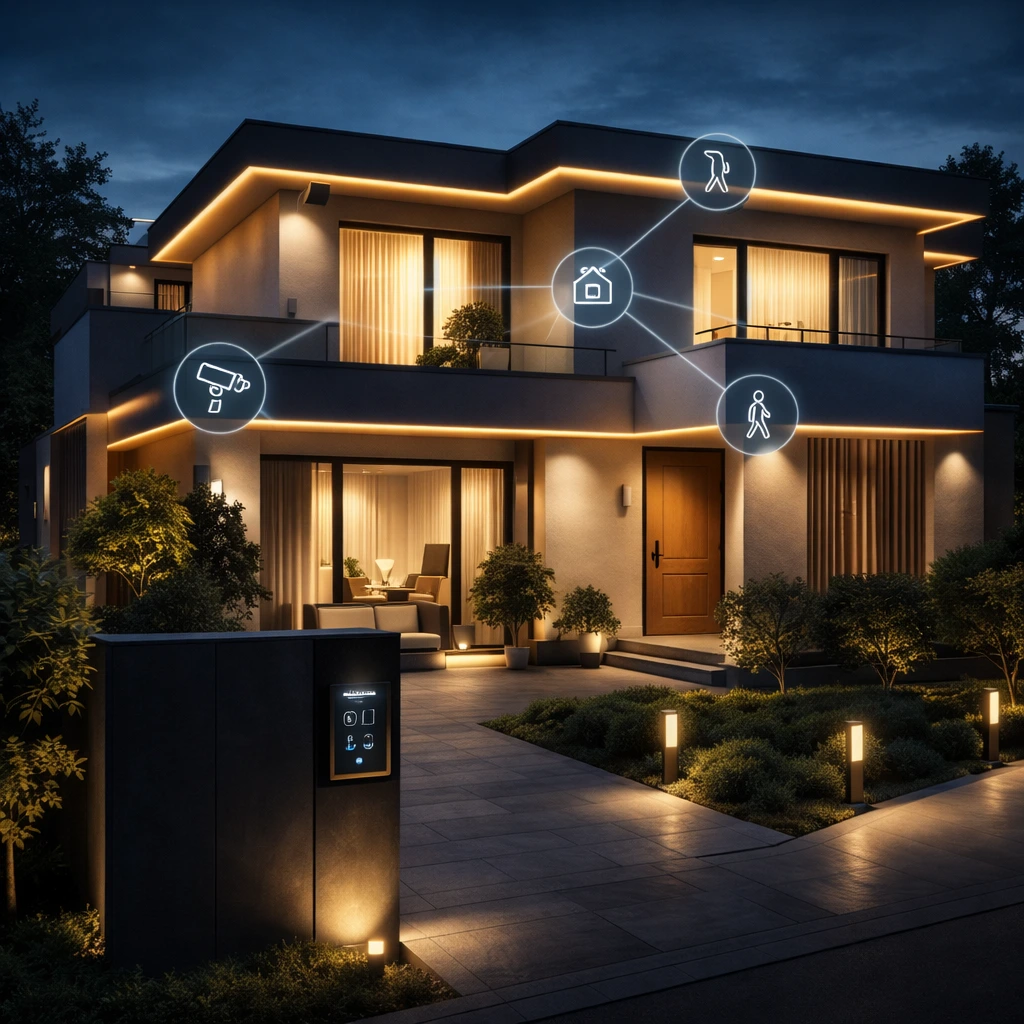
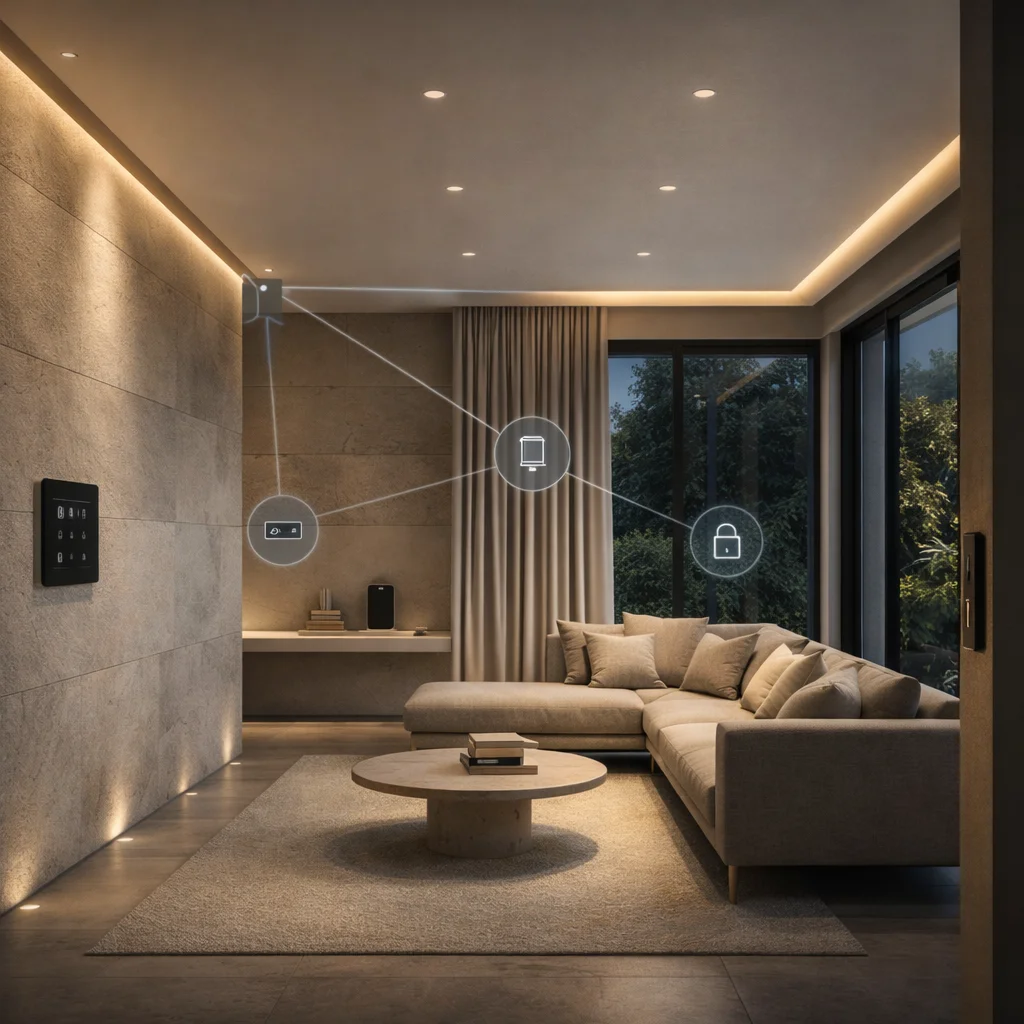
Smart Home vs. Traditional Home
The difference between smart homes and traditional homes lies in control, efficiency, and integration.
Traditional Home
- Independent systems with no communication
- Manual switches and controls
- Limited energy efficiency
- No centralized management
Smart Home
- Fully interconnected systems
- Centralized and remote control
- Automated lighting, climate, and security
- Designed as part of modern architecture
A smart home adapts to lifestyle patterns rather than requiring constant user interaction.
Why Integration Matters in Smart Homes
The intelligence of a smart home comes from how systems work together.
For example:
- Lighting adjusts automatically based on daylight availability
- Curtains synchronize with lighting and time schedules
- Temperature remains stable without manual adjustments
- Security operates discreetly in the background
This integration creates a seamless and calm living experience.
Are Smart Homes Only for Luxury Properties?
While smart homes are common in luxury residences, the concept is no longer limited to high-end villas.
Today, smart home systems are used in:
- Modern apartments
- Townhouses
- Renovation projects
What defines a smart home is design quality, not property size.
Benefits of Smart Homes
A well-designed smart home offers:
- Improved daily comfort
- Better energy management
- Enhanced security
- Long-term property value
Compared to traditional homes, smart homes provide a more efficient and refined living environment.
Conclusion
A smart home represents the evolution of residential living. By integrating lighting, climate, security, and automation into a single system, smart homes offer a level of control and comfort that traditional homes cannot match. When properly designed, smart technology enhances the space—quietly, efficiently, and intelligently.